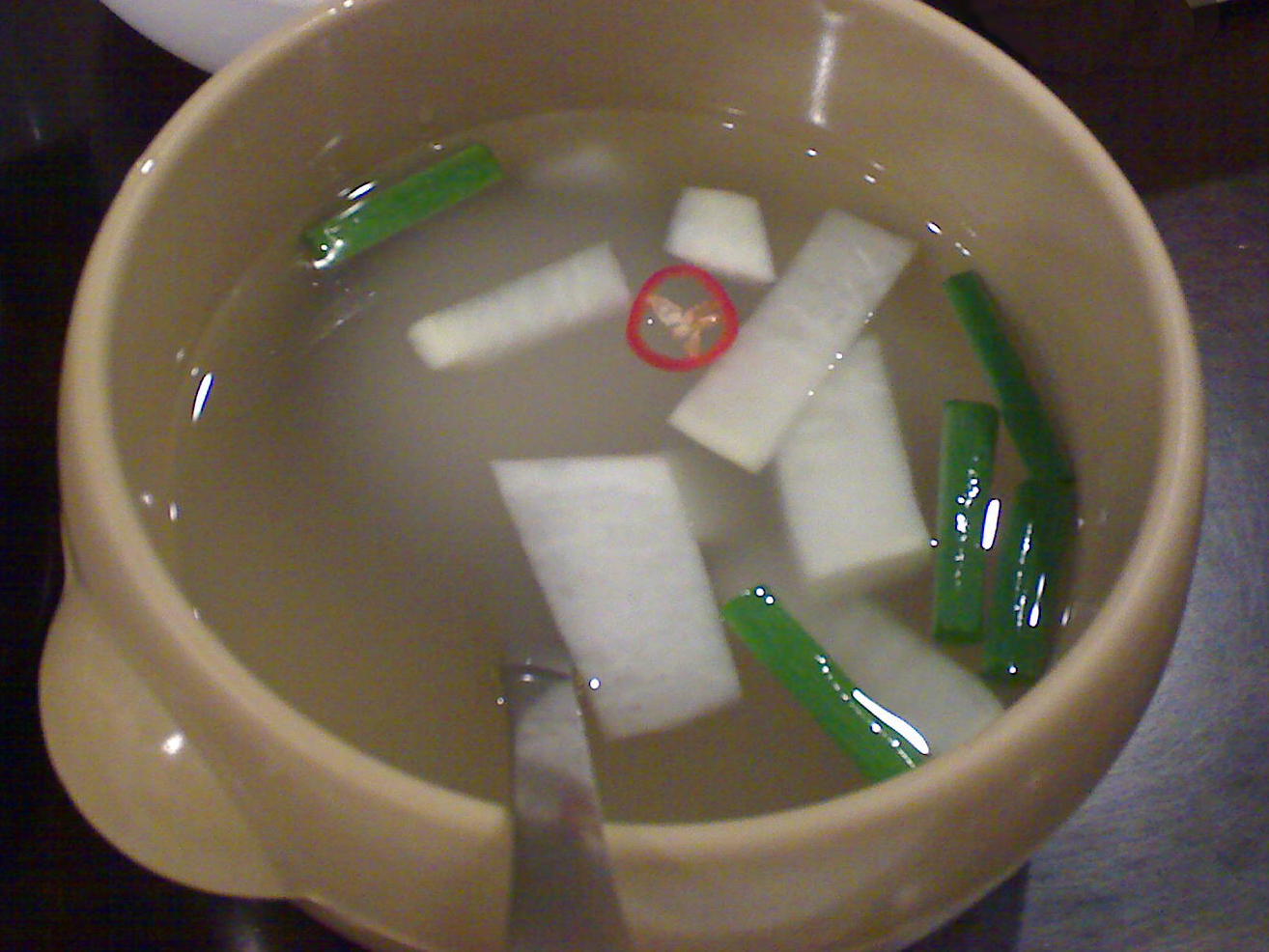
1. Kimchi
 Must I say more? If you don't know where kimchi came from, perhaps you need to go back to learn the most basics about Korean culture. These amazing yet addicting cabbage pieces strangely not only have been winning all the love at Korean dinner tables throughout the history but have stepped up to represent Korean food internationally. Koreans take their kimchi seriously. Every household proudly brags about their unique kimchi recipes to their dinner guests. There is a whole lot of pride that goes with it. If you haven't tried kimchi yet, maybe put that on your to-do list.
 Must I say more? If you don't know where kimchi came from, perhaps you need to go back to learn the most basics about Korean culture. These amazing yet addicting cabbage pieces strangely not only have been winning all the love at Korean dinner tables throughout the history but have stepped up to represent Korean food internationally. Koreans take their kimchi seriously. Every household proudly brags about their unique kimchi recipes to their dinner guests. There is a whole lot of pride that goes with it. If you haven't tried kimchi yet, maybe put that on your to-do list.
2. Galbi
 If kimchi represents Korean food as a whole, galbi represents Korean barbecue. This soy sauce marinated, fruity and savory grilled short ribs are the biggest treat for any Korean families as their top choice of occasional eat outs. I remember the excitement and salivation whenever he got paid from work and decided to take us out for some galbi. Traditionally, galbi had been a choice of food for the privileged as beef was expensive in old day Korea. Not surprisingly, short rib is the part of beef that is one of the most expensive parts in Korea due to a high demand level. In the United States, not so much yet although in restaurants they still may be. Like every Korean barbecue dish, galbi comes with a variety of side dishes and lettuce wraps at restaurants.
 If kimchi represents Korean food as a whole, galbi represents Korean barbecue. This soy sauce marinated, fruity and savory grilled short ribs are the biggest treat for any Korean families as their top choice of occasional eat outs. I remember the excitement and salivation whenever he got paid from work and decided to take us out for some galbi. Traditionally, galbi had been a choice of food for the privileged as beef was expensive in old day Korea. Not surprisingly, short rib is the part of beef that is one of the most expensive parts in Korea due to a high demand level. In the United States, not so much yet although in restaurants they still may be. Like every Korean barbecue dish, galbi comes with a variety of side dishes and lettuce wraps at restaurants.
3. Bulgogi
 Beef teriyaki with kicks? Or perhaps is it totally different? My answer to that about bulgogi - same category with distinctive differences. Bulgogi is tender, savory, juicy and sometimes grilled. It's soupier than teriyaki. This popular dish has been one of the most commonly popular dishes universally. Any meat eating human being would appreciate the experience of eating bulgogi as I would say this is the least edgy mainstream hit in Korean food.
 Beef teriyaki with kicks? Or perhaps is it totally different? My answer to that about bulgogi - same category with distinctive differences. Bulgogi is tender, savory, juicy and sometimes grilled. It's soupier than teriyaki. This popular dish has been one of the most commonly popular dishes universally. Any meat eating human being would appreciate the experience of eating bulgogi as I would say this is the least edgy mainstream hit in Korean food.
4. Samgyupsal
 Korean bacon or unsalted bacon? Yes, the accurate answer is pork belly. Simple and fatty, samgyupsal is the runner-up in the Korean barbecue category, perhaps a threatening figure to replace galbi the winner. Why so popular? It's cheap. Really that's it? No, obviously by that standard, dirt would be the most popular. Samgyupsal is just amazing. Its flavor and all the side dishes and sauces you can add to it blow any hungry person to an outer space of joy. Moreover, it's so easy to prepare. If you can unwrap a pack of meat, you can prepare samgyupsal. As a boy, I tried samgyup sal cooked instantly on a shovel prepared by a group of furnace workers. It was just so good I did not have time to think about what they used the shovel for... until now.
 Korean bacon or unsalted bacon? Yes, the accurate answer is pork belly. Simple and fatty, samgyupsal is the runner-up in the Korean barbecue category, perhaps a threatening figure to replace galbi the winner. Why so popular? It's cheap. Really that's it? No, obviously by that standard, dirt would be the most popular. Samgyupsal is just amazing. Its flavor and all the side dishes and sauces you can add to it blow any hungry person to an outer space of joy. Moreover, it's so easy to prepare. If you can unwrap a pack of meat, you can prepare samgyupsal. As a boy, I tried samgyup sal cooked instantly on a shovel prepared by a group of furnace workers. It was just so good I did not have time to think about what they used the shovel for... until now.
5. Seafood pancake
 This dish is also called Hemul Pajeon. This is probably what represents Korean appetizers. It's a thinly fried pancake with vegetables and seafood such as shrimp, squid and oysters. Usually, when I eat pajeon before the main course, I get to take all my main course home since I have some self-control issues. The dipping sauce is the killer. It's a mix of soy sauce, vinegar and spices.
 This dish is also called Hemul Pajeon. This is probably what represents Korean appetizers. It's a thinly fried pancake with vegetables and seafood such as shrimp, squid and oysters. Usually, when I eat pajeon before the main course, I get to take all my main course home since I have some self-control issues. The dipping sauce is the killer. It's a mix of soy sauce, vinegar and spices.
6. Soon tofu stew
 This spicy bowl of stew is just full of kicks and joy. Soon tofu (silky and otherwise mushy tofu) is ironically the least tasty ingredient in this bowl. It's the variety of other ingredients you can choose to put in there such as beef, pork, shrimp, squid, mushrooms, vegetables, kimchi, seafood and the list goes on. A cracked raw egg diving into a boiling stew still boiling in a heat-preserved earthen bowl, cooks to perfection. I like mine fishy and seafoody. I am a sucker for soon tofu stew whenever it rains. Watch out for msg usage at some Korean restaurants though if you're sensitive to msg. Apparently, some places without much expertise in cooking this stew uses a handful of it.
 This spicy bowl of stew is just full of kicks and joy. Soon tofu (silky and otherwise mushy tofu) is ironically the least tasty ingredient in this bowl. It's the variety of other ingredients you can choose to put in there such as beef, pork, shrimp, squid, mushrooms, vegetables, kimchi, seafood and the list goes on. A cracked raw egg diving into a boiling stew still boiling in a heat-preserved earthen bowl, cooks to perfection. I like mine fishy and seafoody. I am a sucker for soon tofu stew whenever it rains. Watch out for msg usage at some Korean restaurants though if you're sensitive to msg. Apparently, some places without much expertise in cooking this stew uses a handful of it.
7. Spicy cold noodle
 Spicy cold noodle - you said it all. It's spicy; it's cold; and it's a noodle dish. Wait, there's one more. This spicy cold noodle (bibim nengmyun) is really really good. Every time I go to a non-barbecue Korean restaurant, I always order this one. Maybe it's addicting. I always regret ordering something else if I do. Note this dish is also eaten as a dessert after a good meal of galbi in Korea. That is just too much of an indulgence I would say. I wonder if people do that because of the same feeling that I have when I eat something else - regret that it wasn't the spicy cold noodle! In summer time, please try this dish at a Korean restaurant. If you do not like spicy food, get the soupy one called mool nengmyun, meaning cold noodle in chilled beef broth with a bunch of yummy goodies thrown on top such as beef strips, pear, pickled dikon radish slices and more.
 Spicy cold noodle - you said it all. It's spicy; it's cold; and it's a noodle dish. Wait, there's one more. This spicy cold noodle (bibim nengmyun) is really really good. Every time I go to a non-barbecue Korean restaurant, I always order this one. Maybe it's addicting. I always regret ordering something else if I do. Note this dish is also eaten as a dessert after a good meal of galbi in Korea. That is just too much of an indulgence I would say. I wonder if people do that because of the same feeling that I have when I eat something else - regret that it wasn't the spicy cold noodle! In summer time, please try this dish at a Korean restaurant. If you do not like spicy food, get the soupy one called mool nengmyun, meaning cold noodle in chilled beef broth with a bunch of yummy goodies thrown on top such as beef strips, pear, pickled dikon radish slices and more.
8. Korean fried chicken
 This is a modernly developed dish. Or maybe there was a region in Korea where fried chicken with their own special Korean sauce was popularly enjoyed. Nationally, it was not until the 80's when this Korean fried chicken (KFC?) gained its popularity through chain stores and delivery services at night. They have several different sauces applied to the thinly fried chicken pieces including sweet and spicy (most popular), sweet and soy sauce flavored and more. In big cities in the United States such as New York and Los Angeles, the most popular franchises of Korean fried chicken opened their stores and heard they are doing very well. Google Kochon, Bonchon or BBQ Chicken Korea. My favorite part is that they come with sweet pickled dikon radish cubes.
 This is a modernly developed dish. Or maybe there was a region in Korea where fried chicken with their own special Korean sauce was popularly enjoyed. Nationally, it was not until the 80's when this Korean fried chicken (KFC?) gained its popularity through chain stores and delivery services at night. They have several different sauces applied to the thinly fried chicken pieces including sweet and spicy (most popular), sweet and soy sauce flavored and more. In big cities in the United States such as New York and Los Angeles, the most popular franchises of Korean fried chicken opened their stores and heard they are doing very well. Google Kochon, Bonchon or BBQ Chicken Korea. My favorite part is that they come with sweet pickled dikon radish cubes.
9. Ddeokbokki
 Every Korean kid lives and dies for Ddeokbokki (Tteokbokki, I know - the inconsistency in spelling). For that reason, every school in Korea has a Ddeokbokki joint in front of it and a massive influx of students raid those places after school. Interestingly, some kids may not love their mom cooked Ddeokbokki as the street and less nutritious versions may have won over their heart since young and been defined as comfort food. As for non-Koreans, some people love it some do not care for it - after all it's just some rice sticks with spicy sauce on it. Perhaps, the right place to be introduced to this dish is the streets of Korean cities as this is the most popular street food in Korea.
 Every Korean kid lives and dies for Ddeokbokki (Tteokbokki, I know - the inconsistency in spelling). For that reason, every school in Korea has a Ddeokbokki joint in front of it and a massive influx of students raid those places after school. Interestingly, some kids may not love their mom cooked Ddeokbokki as the street and less nutritious versions may have won over their heart since young and been defined as comfort food. As for non-Koreans, some people love it some do not care for it - after all it's just some rice sticks with spicy sauce on it. Perhaps, the right place to be introduced to this dish is the streets of Korean cities as this is the most popular street food in Korea.
10. Bibimbap
 Finally, we come to this - bibimbap. Didn't Tyra Banks say something about bibimbap? World's next top food? I tend of agree with that statement because of nutritional values in this dish. This dish just has everything one can crave for - meat, egg, vegetables, rice and spice. It's the winner dish for the most nutritious and tasty of all time. My grand father has eaten bibimbap for dinner everyday for about 15 years and lived until he was near 90. (Disclaimer: no proven connection or correlation with longevity and bibimbap.)
That's all folks. I hope you have or will have tried those top 10 most popular Korean dishes above.
Finally, we come to this - bibimbap. Didn't Tyra Banks say something about bibimbap? World's next top food? I tend of agree with that statement because of nutritional values in this dish. This dish just has everything one can crave for - meat, egg, vegetables, rice and spice. It's the winner dish for the most nutritious and tasty of all time. My grand father has eaten bibimbap for dinner everyday for about 15 years and lived until he was near 90. (Disclaimer: no proven connection or correlation with longevity and bibimbap.)
That's all folks. I hope you have or will have tried those top 10 most popular Korean dishes above.
 Finally, we come to this - bibimbap. Didn't Tyra Banks say something about bibimbap? World's next top food? I tend of agree with that statement because of nutritional values in this dish. This dish just has everything one can crave for - meat, egg, vegetables, rice and spice. It's the winner dish for the most nutritious and tasty of all time. My grand father has eaten bibimbap for dinner everyday for about 15 years and lived until he was near 90. (Disclaimer: no proven connection or correlation with longevity and bibimbap.)
That's all folks. I hope you have or will have tried those top 10 most popular Korean dishes above.
Finally, we come to this - bibimbap. Didn't Tyra Banks say something about bibimbap? World's next top food? I tend of agree with that statement because of nutritional values in this dish. This dish just has everything one can crave for - meat, egg, vegetables, rice and spice. It's the winner dish for the most nutritious and tasty of all time. My grand father has eaten bibimbap for dinner everyday for about 15 years and lived until he was near 90. (Disclaimer: no proven connection or correlation with longevity and bibimbap.)
That's all folks. I hope you have or will have tried those top 10 most popular Korean dishes above.